@capawesome-team/capacitor-oauth
Capacitor plugin for communicating with OAuth 2.0 and OpenID Connect providers.

Features
We are proud to offer one of the most complete and feature-rich Capacitor plugins for OAuth. Here are some of the key features:
- 🖥️ Cross-platform: Supports Android, iOS and Web.
- 🌐 Providers: Works with any OAuth 2.0 / OpenID Connect provider, including Auth0, Azure AD, Amazon Cognito, Okta and OneLogin.
- 🔐 PKCE: Implements the Authorization Code flow with Proof Key for Code Exchange (PKCE).
- 🔍 Auto-discovery: Automatically fetches endpoints via OpenID Connect discovery.
- 🔄 Token Refresh: Refresh access tokens using a refresh token.
- 🪪 JWT Decoding: Decode JWT ID tokens without verification.
- 🪶 Lightweight: Just a single dependency and zero unnecessary bloat.
- 🤝 Compatibility: Compatible with the Secure Preferences plugin to securely store tokens.
- 📦 CocoaPods & SPM: Supports CocoaPods and Swift Package Manager for iOS.
- 🔁 Up-to-date: Always supports the latest Capacitor version.
- ⭐️ Support: Priority support from the Capawesome Team.
- ✨ Handcrafted: Built from the ground up with care and expertise, not forked or AI-generated.
Missing a feature? Just open an issue and we'll take a look!
Newsletter
Stay up to date with the latest news and updates about the Capawesome, Capacitor, and Ionic ecosystem by subscribing to our Capawesome Newsletter.
Compatibility
| Plugin Version | Capacitor Version | Status |
|---|---|---|
| 0.1.x | >=8.x.x | Active support |
Demo
| Android | iOS | Web |
|---|---|---|
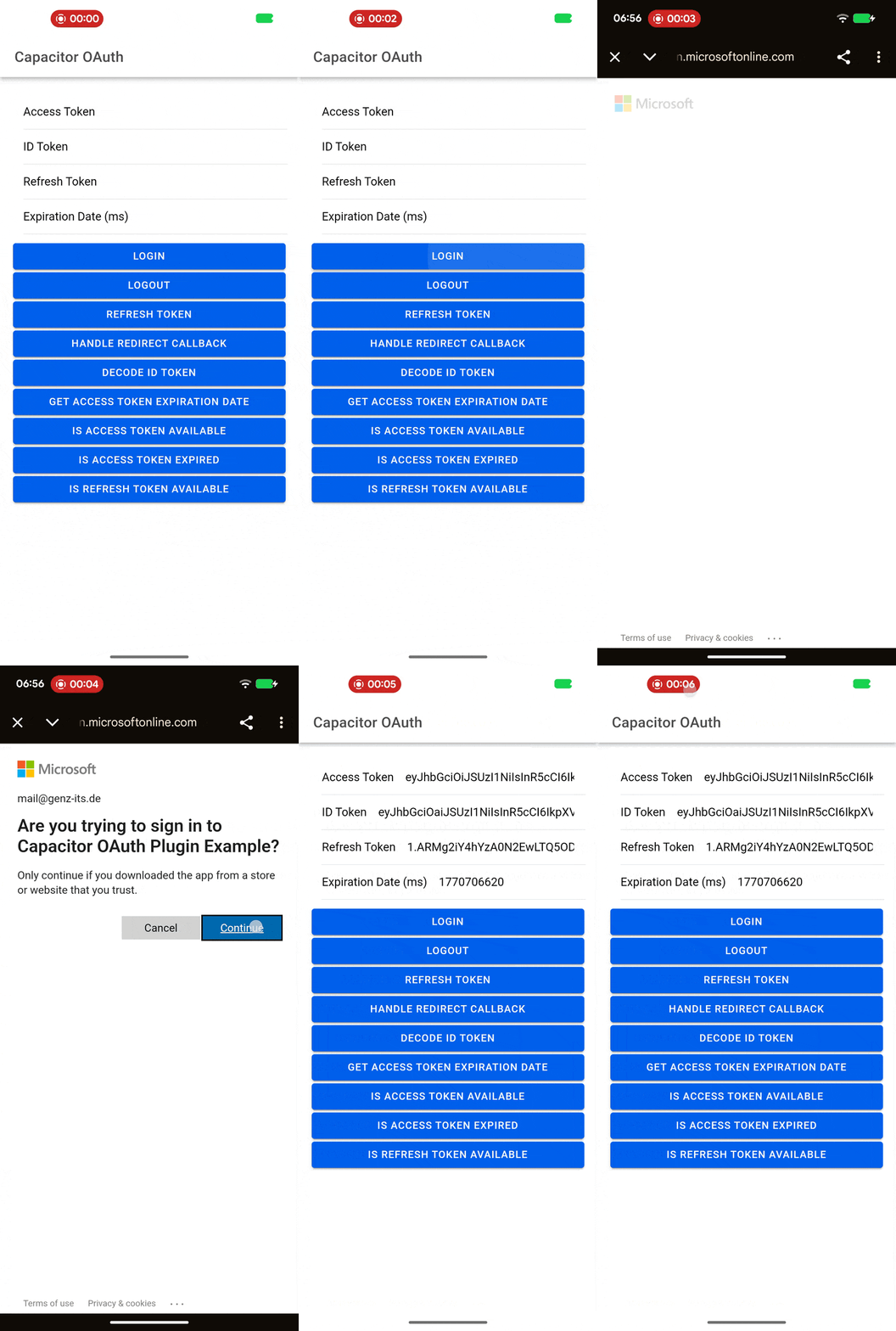 |
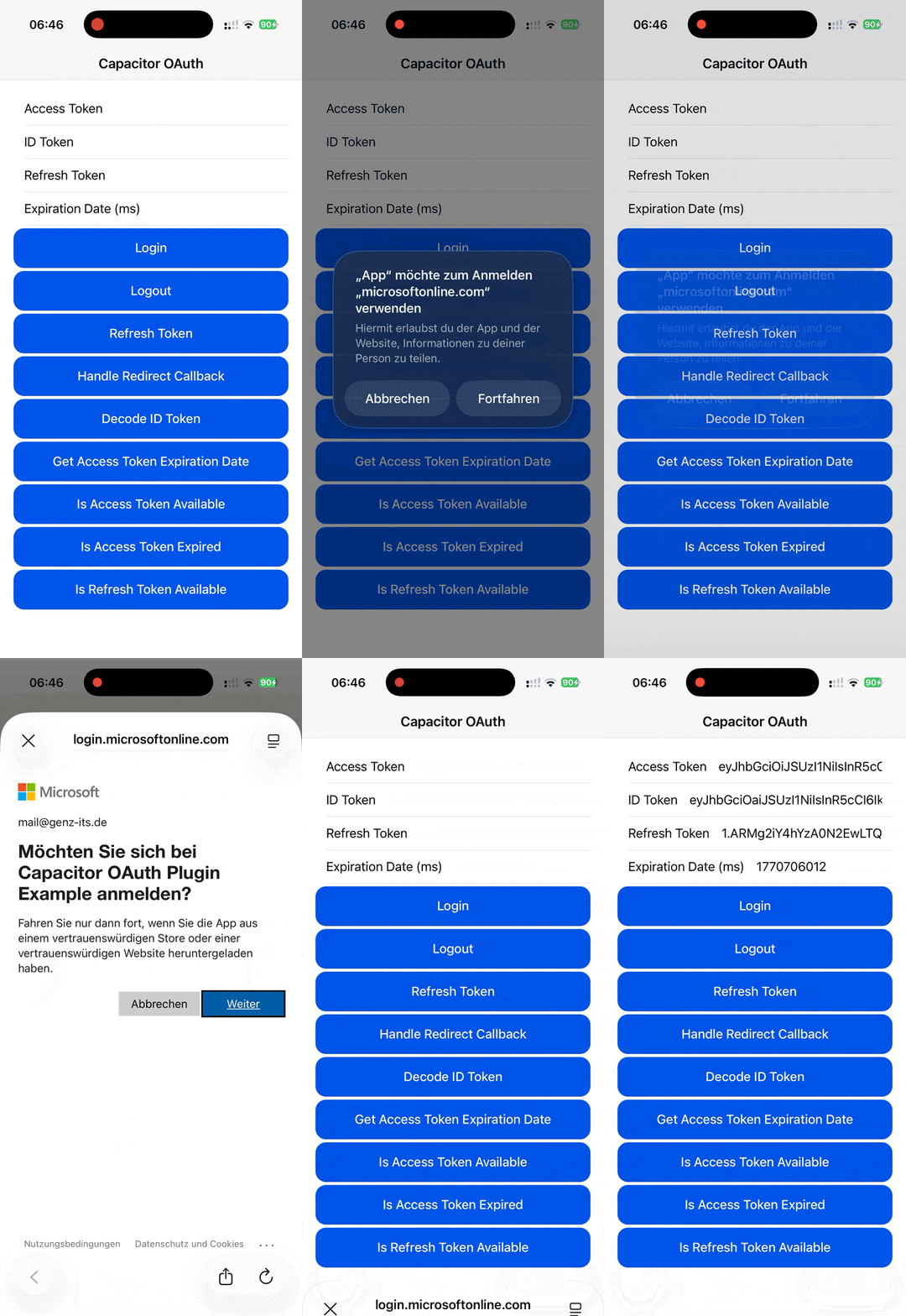 |
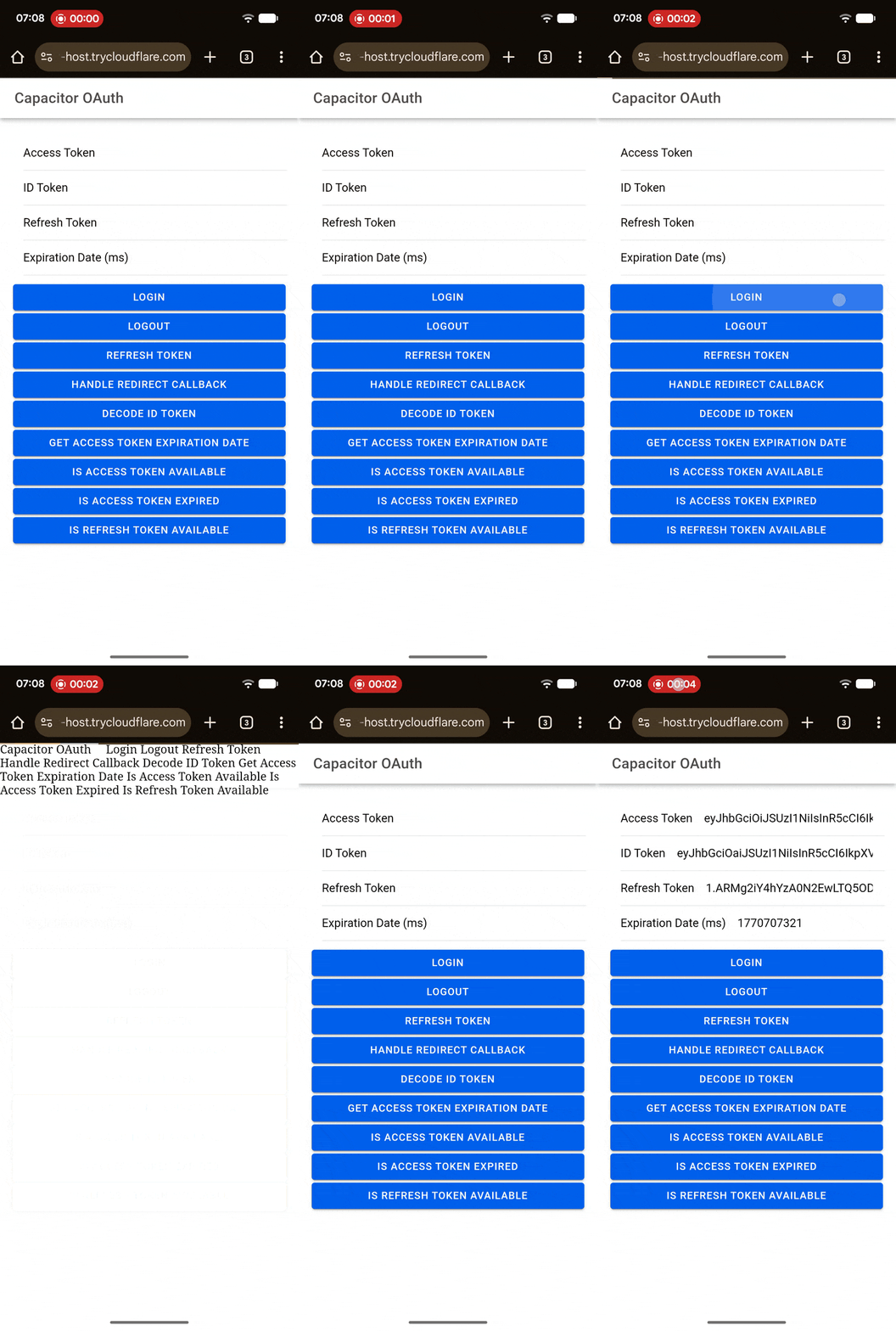 |
Guides
- Announcing the Capacitor OAuth Plugin
- How to Use Better Auth in Capacitor Apps
- How to Sign in with Okta using Capacitor
- How to Sign in with Auth0 using Capacitor
- How to Sign in with Azure Entra ID using Capacitor
- Alternatives to Ionic Enterprise Plugins
Installation
This plugin is only available to Capawesome Insiders. First, make sure you have the Capawesome npm registry set up. You can do this by running the following commands:
npm config set @capawesome-team:registry https://npm.registry.capawesome.io
npm config set //npm.registry.capawesome.io/:_authToken <YOUR_LICENSE_KEY>
Attention: Replace <YOUR_LICENSE_KEY> with the license key you received from Polar. If you don't have a license key yet, you can get one by becoming a Capawesome Insider.
Next, you can use our AI-Assisted Setup to install the plugin. Add the Capawesome Skills to your AI tool using the following command:
Then use the following prompt:
Use the `capacitor-plugins` skill from `capawesome-team/skills` to install the `@capawesome-team/capacitor-oauth` plugin in my project.
If you prefer Manual Setup, install the plugin by running the following commands and follow the platform-specific instructions below:
Android
Variables
This plugin will use the following project variables (defined in your app's variables.gradle file):
$appAuthVersionversion ofnet.openid:appauth(default:0.11.1)
Redirect Scheme
Add the following to your app's build.gradle file to configure the redirect scheme used by AppAuth:
Replace com.example.app with the scheme of your redirect URI.
Proguard
If you are using Proguard, you need to add the following rules to your proguard-rules.pro file:
Usage
import { Oauth } from '@capawesome-team/capacitor-oauth';
import { SecurePreferences } from '@capawesome-team/capacitor-secure-preferences';
import { Capacitor } from '@capacitor/core';

const login = async () => {
  // Sign in the user
  const result = await Oauth.login({
    issuerUrl: 'https://accounts.google.com',
    clientId: 'YOUR_CLIENT_ID',
    redirectUrl: 'com.example.app://oauth/callback',
    scopes: ['openid', 'profile', 'email', 'offline_access'],
  });
  console.log('Access token:', result.accessToken);
  console.log('ID token:', result.idToken);
  console.log('Refresh token:', result.refreshToken);
  // Store the tokens securely
  await SecurePreferences.set({
    key: 'tokens',
    value: JSON.stringify(result),
  });
};

const handleRedirectCallback = async () => {
  if (Capacitor.getPlatform() !== 'web') {
    return;
  }
  // Handle the redirect callback on web
  const result = await Oauth.handleRedirectCallback();
  console.log('Access token:', result.accessToken);
};

const refreshToken = async () => {
  const result = await Oauth.refreshToken({
    issuerUrl: 'https://accounts.google.com',
    clientId: 'YOUR_CLIENT_ID',
    refreshToken: 'YOUR_REFRESH_TOKEN',
  });
  console.log('New access token:', result.accessToken);
};

const logout = async () => {
  await Oauth.logout({
    issuerUrl: 'https://accounts.google.com',
    idToken: 'YOUR_ID_TOKEN',
    postLogoutRedirectUrl: 'com.example.app://oauth/logout',
  });
};

const decodeIdToken = async () => {
  const result = await Oauth.decodeIdToken({
    token: 'YOUR_ID_TOKEN',
  });
  console.log('Payload:', result.payload);
};
API
decodeIdToken(...)getAccessTokenExpirationDate(...)isAccessTokenAvailable(...)isAccessTokenExpired(...)isRefreshTokenAvailable(...)handleRedirectCallback()login(...)logout(...)refreshToken(...)- Interfaces
- Type Aliases
decodeIdToken(...)
Decode a JWT ID token without verification.
| Param | Type |
|---|---|
options |
DecodeIdTokenOptions |
Returns: Promise<DecodeIdTokenResult>
Since: 0.1.0
getAccessTokenExpirationDate(...)
getAccessTokenExpirationDate(options: GetAccessTokenExpirationDateOptions) => Promise<GetAccessTokenExpirationDateResult>
Get the access token expiration date as an ISO 8601 string.
| Param | Type |
|---|---|
options |
GetAccessTokenExpirationDateOptions |
Returns: Promise<GetAccessTokenExpirationDateResult>
Since: 0.1.0
isAccessTokenAvailable(...)
isAccessTokenAvailable(options: IsAccessTokenAvailableOptions) => Promise<IsAccessTokenAvailableResult>
Check if an access token is available (non-null and non-empty).
| Param | Type |
|---|---|
options |
IsAccessTokenAvailableOptions |
Returns: Promise<IsAccessTokenAvailableResult>
Since: 0.1.0
isAccessTokenExpired(...)
Check if the access token has expired.
| Param | Type |
|---|---|
options |
IsAccessTokenExpiredOptions |
Returns: Promise<IsAccessTokenExpiredResult>
Since: 0.1.0
isRefreshTokenAvailable(...)
isRefreshTokenAvailable(options: IsRefreshTokenAvailableOptions) => Promise<IsRefreshTokenAvailableResult>
Check if a refresh token is available (non-null and non-empty).
| Param | Type |
|---|---|
options |
IsRefreshTokenAvailableOptions |
Returns: Promise<IsRefreshTokenAvailableResult>
Since: 0.1.0
handleRedirectCallback()
Handle the redirect callback after a login or logout redirect on the web.
Call this method on page load when the URL contains authorization response parameters.
Only available on Web.
Returns: Promise<LoginResult>
Since: 0.1.0
login(...)
Start an OAuth 2.0 authorization code flow with PKCE.
| Param | Type |
|---|---|
options |
LoginOptions |
Returns: Promise<LoginResult>
Since: 0.1.0
logout(...)
End the OAuth session by calling the end-session endpoint.
Note that some providers (e.g. Microsoft Entra ID) may not redirect back to the app
after logout and instead show a "You have signed out" page. In this case, the user
has to close the browser manually which results in a USER_CANCELED error even though
the logout was successful.
| Param | Type |
|---|---|
options |
LogoutOptions |
Since: 0.1.0
refreshToken(...)
Refresh the access token using a refresh token.
| Param | Type |
|---|---|
options |
RefreshTokenOptions |
Returns: Promise<LoginResult>
Since: 0.1.0
Interfaces
DecodeIdTokenResult
| Prop | Type | Description | Since |
|---|---|---|---|
header |
Record<string, unknown> |
The decoded JWT header. | 0.1.0 |
payload |
Record<string, unknown> |
The decoded JWT payload containing the claims. | 0.1.0 |
DecodeIdTokenOptions
| Prop | Type | Description | Since |
|---|---|---|---|
token |
string |
The JWT ID token string to decode. | 0.1.0 |
GetAccessTokenExpirationDateResult
| Prop | Type | Description | Since |
|---|---|---|---|
date |
string |
The access token expiration date as an ISO 8601 string. | 0.1.0 |
GetAccessTokenExpirationDateOptions
| Prop | Type | Description | Since |
|---|---|---|---|
accessTokenExpirationDate |
number |
The access token expiration date in epoch milliseconds. | 0.1.0 |
IsAccessTokenAvailableResult
| Prop | Type | Description | Since |
|---|---|---|---|
isAvailable |
boolean |
Whether the access token is non-null and non-empty. | 0.1.0 |
IsAccessTokenAvailableOptions
| Prop | Type | Description | Since |
|---|---|---|---|
accessToken |
string |
The access token to check. | 0.1.0 |
IsAccessTokenExpiredResult
| Prop | Type | Description | Since |
|---|---|---|---|
isExpired |
boolean |
Whether the access token has expired. | 0.1.0 |
IsAccessTokenExpiredOptions
| Prop | Type | Description | Since |
|---|---|---|---|
accessTokenExpirationDate |
number |
The access token expiration date in epoch milliseconds. | 0.1.0 |
IsRefreshTokenAvailableResult
| Prop | Type | Description | Since |
|---|---|---|---|
isAvailable |
boolean |
Whether the refresh token is non-null and non-empty. | 0.1.0 |
IsRefreshTokenAvailableOptions
| Prop | Type | Description | Since |
|---|---|---|---|
refreshToken |
string |
The refresh token to check. | 0.1.0 |
LoginResult
| Prop | Type | Description | Since |
|---|---|---|---|
accessToken |
string |
The access token. | 0.1.0 |
accessTokenExpirationDate |
number |
The access token expiration date in epoch milliseconds. | 0.1.0 |
idToken |
string |
The JWT ID token (OpenID Connect). | 0.1.0 |
refreshToken |
string |
The refresh token. | 0.1.0 |
scope |
string |
The granted scopes as a space-delimited string. | 0.1.0 |
tokenType |
string |
The token type. | 0.1.0 |
LoginOptions
| Prop | Type | Description | Since |
|---|---|---|---|
issuerUrl |
string |
The OpenID Connect issuer URL for auto-discovery. The plugin will fetch the OpenID Connect discovery document from {issuerUrl}/.well-known/openid-configuration to obtain the authorization and token endpoint URLs. Either issuerUrl or both authorizationEndpoint and tokenEndpoint must be provided. |
0.1.0 |
authorizationEndpoint |
string |
The authorization endpoint URL. Either issuerUrl or both authorizationEndpoint and tokenEndpoint must be provided. |
0.1.0 |
tokenEndpoint |
string |
The token endpoint URL. Either issuerUrl or both authorizationEndpoint and tokenEndpoint must be provided. |
0.1.0 |
clientId |
string |
The OAuth client ID. | 0.1.0 |
redirectUrl |
string |
The redirect URI to use after authentication. | 0.1.0 |
scopes |
string[] |
The OAuth scopes to request. | 0.1.0 |
loginHint |
string |
A hint to the authorization server about the user's identifier to pre-fill the login form. | 0.1.0 |
prompt |
string |
The prompt parameter to control the authorization server UI behavior. | 0.1.0 |
additionalParameters |
Record<string, string> |
Additional parameters to include in the authorization request. | 0.1.0 |
LogoutOptions
| Prop | Type | Description | Since |
|---|---|---|---|
issuerUrl |
string |
The OpenID Connect issuer URL used to fetch the discovery document at {issuerUrl}/.well-known/openid-configuration. Either issuerUrl or endSessionEndpoint must be provided. |
0.1.0 |
endSessionEndpoint |
string |
The end-session endpoint URL. Either issuerUrl or endSessionEndpoint must be provided. |
0.1.0 |
idToken |
string |
The ID token hint for session identification. | 0.1.0 |
postLogoutRedirectUrl |
string |
The redirect URI to use after logout. | 0.1.0 |
additionalParameters |
Record<string, string> |
Additional parameters to include in the end-session request. | 0.1.0 |
RefreshTokenOptions
| Prop | Type | Description | Since |
|---|---|---|---|
issuerUrl |
string |
The OpenID Connect issuer URL used to fetch the discovery document at {issuerUrl}/.well-known/openid-configuration. Either issuerUrl or tokenEndpoint must be provided. |
0.1.0 |
tokenEndpoint |
string |
The token endpoint URL. Either issuerUrl or tokenEndpoint must be provided. |
0.1.0 |
clientId |
string |
The OAuth client ID. | 0.1.0 |
refreshToken |
string |
The refresh token obtained from login. | 0.1.0 |
additionalParameters |
Record<string, string> |
Additional parameters to include in the token refresh request. | 0.1.0 |
Type Aliases
HandleRedirectCallbackResult
RefreshTokenResult
Changelog
See CHANGELOG.md.
Breaking Changes
See BREAKING.md.
License
See LICENSE.